Blog · Blogs
Building Rental Rooms with Autoclaved Aerated Concrete: Why Not?
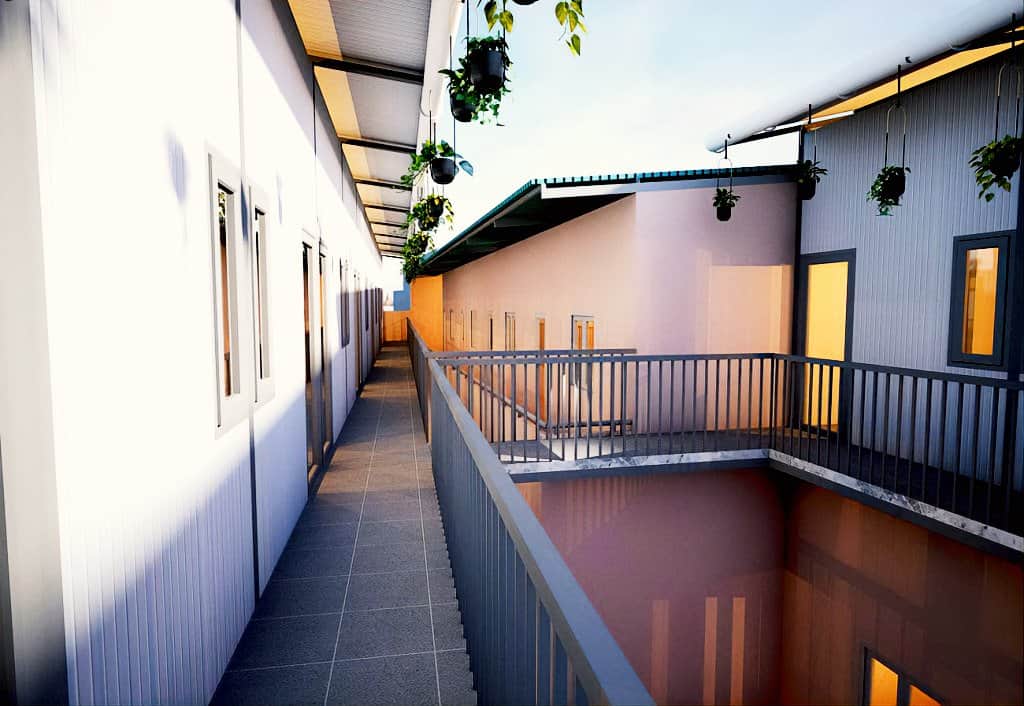
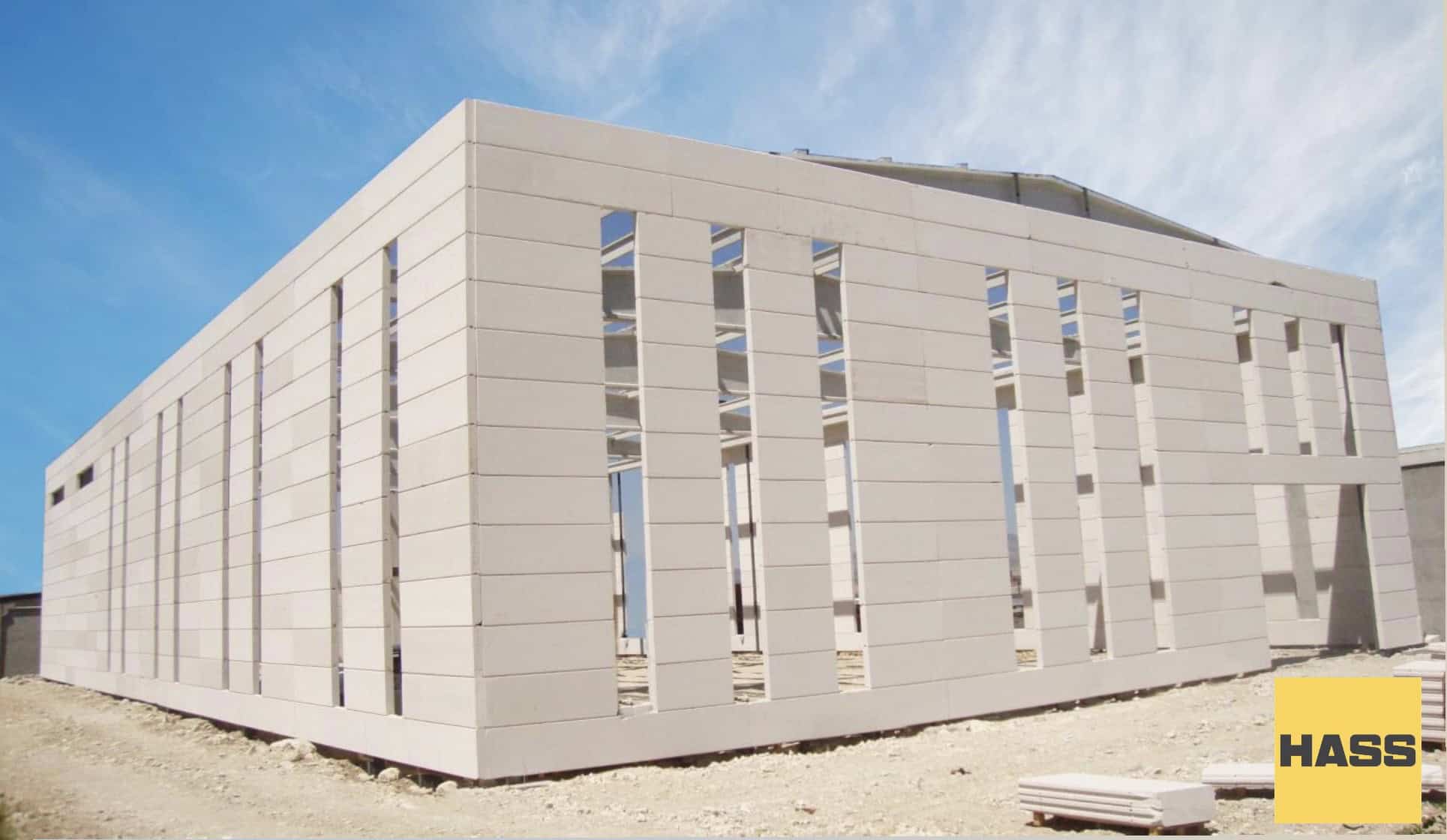
Building rented rooms with autoclaved aerated concrete during the current land fever is a real estate investment trend that brings high economic efficiency as well as other values to the community. Using AAC AAC lightweight blocks to build boarding houses will help investors save a very significant amount of costs.
This article will outline the reasons why you should build a motel room with autoclaved aerated concrete:
*
Should we build a rented room with autoclaved aerated concrete?
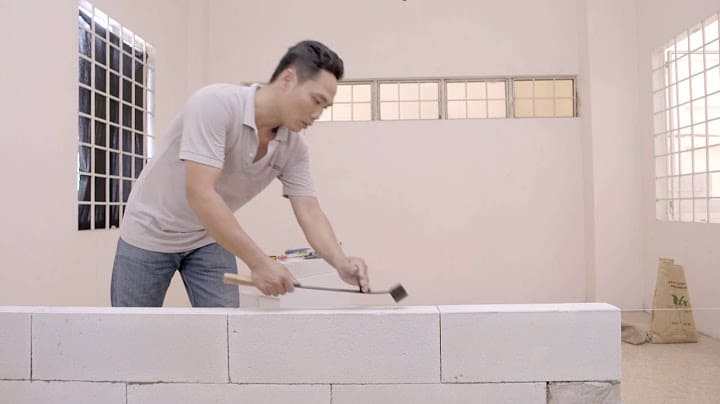
Thanks to the characteristics of AAC blocks, they are much lighter than traditional materials, making the construction and transportation process easier to carry and deliver, thereby helping to speed up the construction time of boarding houses.
Although AAC AAC lightweight blocks are larger in size than regular bricks, the weight is 1/2 to 1/3 lighter than regular fired clay bricks and only 1/4 the weight of regular concrete bricks compared to 1 size. The reason is that bricks have an air bubble structure and account for up to 80% of the entire structure inside the brick. And that is the support feature for AAC blocks to be constructed quickly and save time.

Building a boarding house is perfect, because boarding houses always need quiet and private space between rooms. Using autoclaved aerated concrete blocks as partitions as well as boarding house walls will help ensure privacy. AAC blocks have the ability to customize the size to suit the investor's requirements but will always maintain the necessary durability. *Because of this, using lightweight AAC blocks to build boarding houses will help put the project into use faster, thereby recovering capital faster than with conventional construction methods.
Good sound insulation creates a quiet living space:
Lightweight tiles with effective sound dissipation thanks to their air bubble structure and outstanding sound absorption ability. Whether the sound comes from outside or inside the house, it is forced to follow a zigzag path, causing the sound wave to gradually and minimally split as it passes through the wall. This is very necessary when building a boarding house because customers always need a quiet and private space between rooms.
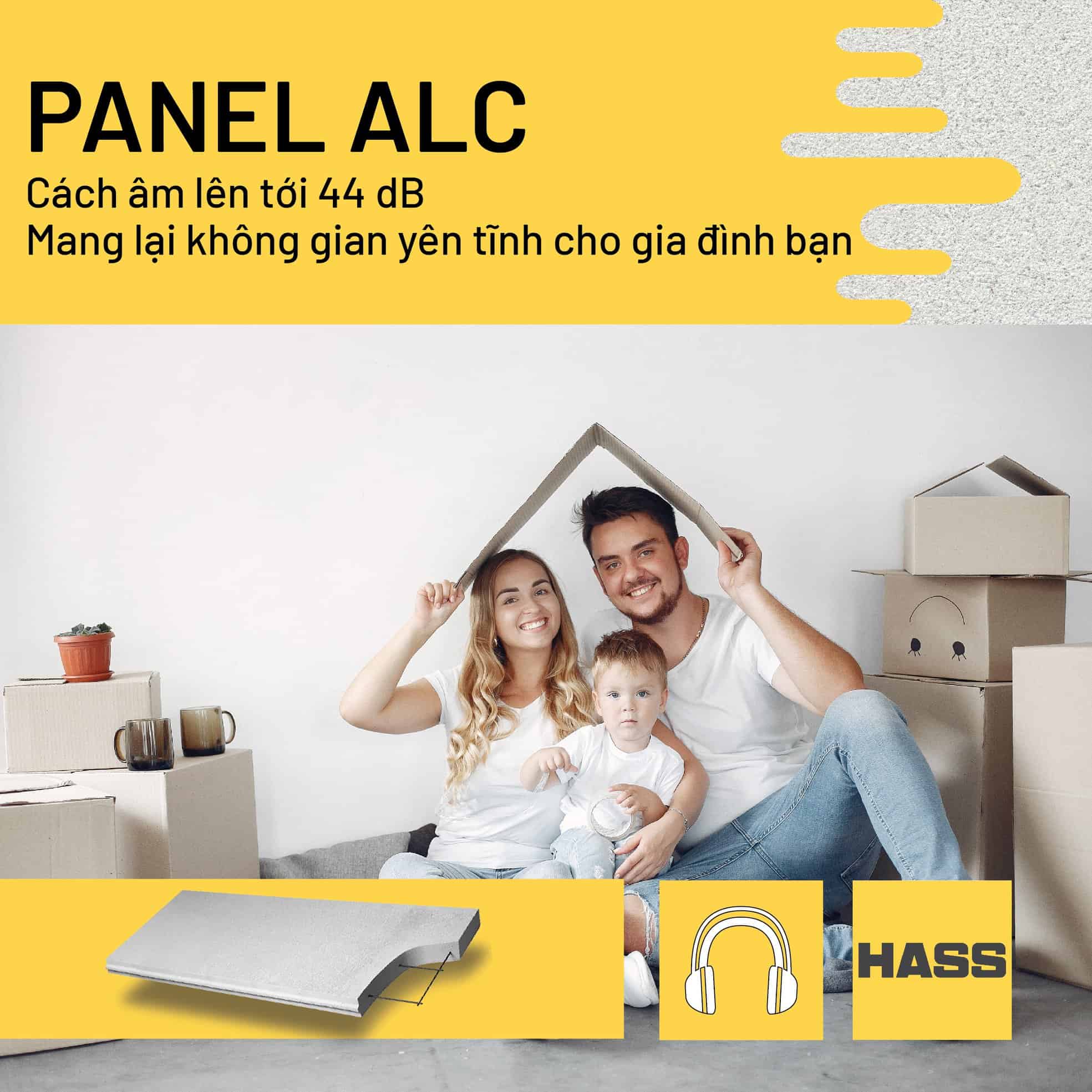
Using autoclaved aerated concrete blocks for partitions as well as boarding house walls will help ensure sound insulation factors that are many times better than conventional traditional bricks. Using AAC AAC lightweight blocks to build boarding houses will help ensure the privacy of each tenant, thereby increasing tenant satisfaction.
Good insulation, helps keep cool and warm:
AAC blocks are currently divided into two types: AAC AAC lightweight blocks and ALC wall panels, both of these products have insulation coefficients of 0.18 ≈ 0.12 W/m0K
Compared to Normal fired clay brick's thermal insulation coefficient is 0.814 W/m0K, It can be seen that the thermal insulation ability of AAC AAC lightweight blocks far exceeds that of regular fired clay bricks. Maybe 5 to 7 times.
Therefore, using AAC ultra-AAC lightweight blocks to build boarding houses is an extremely reasonable choice, because it has good thermal insulation, creating a "cool in summer, warm in winter" effect, giving residents a comfortable, cool and warm feeling after a day of work.

Fast construction saves costs:
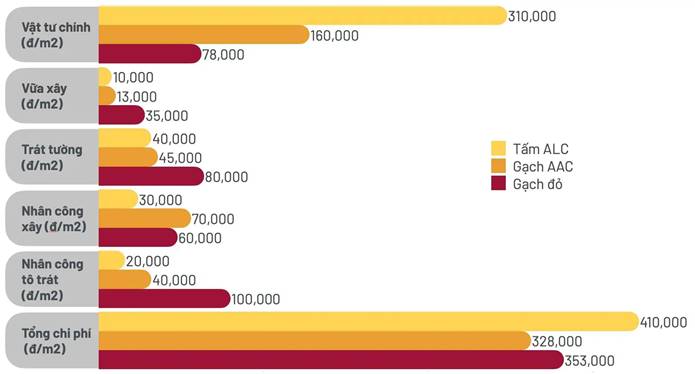
Large volume but extremely light, convenient construction. Building a room with autoclaved aerated concrete is the best way to balance costs. Because the number of construction workers is not needed too much, costs are saved. Thanks to reducing the workload of construction workers. The brick size is large but extremely light and convenient to construct. Using air bricks to build boarding houses is the best way to balance costs. Because the number of construction workers is not needed too much, it saves quite a lot of costs.
Construction time is fast because the average speed of a worker who knows how to build AAC AAC lightweight blocks is 30 - 35 m² a day, 2 times faster than fired clay bricks of about 15m2 a day. Thereby shortening the construction day, helping the project go into production faster, saving labor costs.
In addition to room fees, electricity and water bills are also of concern to many tenants, because this is a relatively large expense in the tenant's total monthly living expenses. If the inn owner uses AAC AAC lightweight blocks to build the inn, compared to regular fired clay bricks, electricity consumption can be reduced by up to 40%, tenants will stay long term and introduce a large number of new tenants.
The popularity of motels with customers is very high. Let's analyze with HASS why AAC AAC lightweight blocks can save energy consumption up to 40%.
The first reason is that AAC lightweight concrete bricks and ALC panels are structured with countless tiny holes inside, which work to block the flow of heat from a high-temperature environment to a low-temperature environment. In addition, aerated concrete also prevents heat radiation, limits absorption and prevents heat dissipation and rapid heat conduction in locations often exposed to sunlight.
Helps save over 40% of electricity costs, used for cooling fans and air conditioners. One of the indispensable needs of consumers today.
Need a quotation or technical advice?
Send a request and the HASS technical team will respond during business hours.