
Questions and answers
Frequently Asked Questions
36 common questions about HASS AAC blocks and ALC panels. Need a project-specific answer? Contact the HASS technical team.
Products
What is HASS AAC?
HASS AAC Autoclaved aerated concrete is a non-fired, environmentally friendly and lightweight building material. Chemical reactions during production create millions of air pores. The product is cured in an autoclave at high temperature and pressure for 12 hours. It is an advanced building material that has been used worldwide for nearly 100 years.
Why choose HASS?
Customer focus: Customer satisfaction is paramount to us. We prioritize open communication and prompt, transparent responses to meet customer needs and build long-term partnerships based on trust and mutual respect.
Quality products: We are committed to manufacturing high-quality AAC blocks and ALC panels that meet stringent quality standards and provide durability and reliability in construction projects.
Expertise and experience: With many years of experience in building materials and hundreds of projects supplied in Vietnam and abroad, our specialists have in-depth knowledge of AAC and ALC products and support customers from design through construction.
What raw materials are used to make HASS AAC?
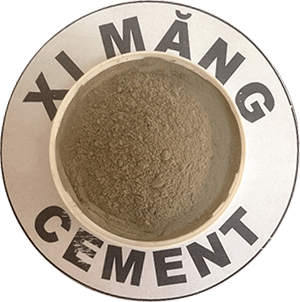
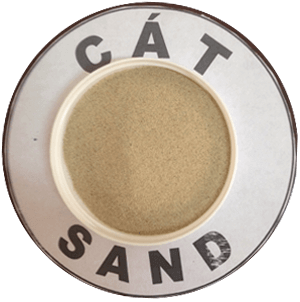
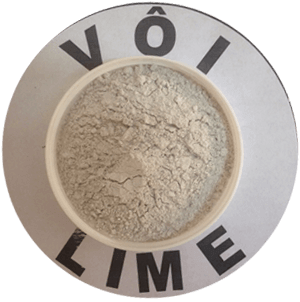
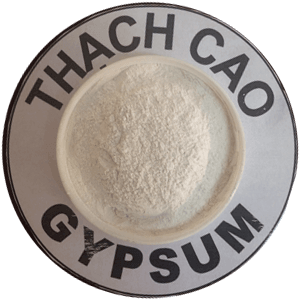
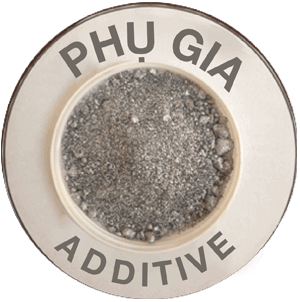
Production uses only 1/3 of the raw materials required for fired clay brick.
Which product lines does HASS provide?
HASS product lines include AAC blocks, wall panels, floor panels and specialized mortars.
How can I get HASS product information?
Technical and general product information is available on our website hass.vn . For direct consultation, customers may visit a distributor or call Customer Care at (+848) 22534535 – 22534536, hotline 0931532456, or email htkd@hass.vn.
What are the main benefits of HASS products?
The main benefits of HASS products include fire resistance, durability, thermal insulation, sound insulation, insect resistance, consistent dimensions, fast and easy installation, light weight, non-toxicity and environmental friendliness.
What are the limitations of HASS products?
Autoclaved aerated concrete provides excellent sound insulation and helps maintain quiet between rooms in an apartment. Its strongest benefits are sound and thermal insulation, whose full value is most apparent when the panels are used for external envelope walls.
Applications
Do some countries build with AAC wall panels instead of conventional fired clay brick?
Yes. Many developed countries stopped using fired clay brick long ago and use autoclaved aerated concrete for thermal insulation and load reduction, particularly in places such as Taiwan and Japan where earthquake resistance is important.
When autoclaved aerated concrete is used for high-rise walls, lighter walls generate lower inertial forces during seismic movement. In addition to being lightweight, the material can absorb impact energy from vibration, helping reduce earthquake damage.
Should HASS wall panels be used for partitions in high-rise apartments?
Autoclaved aerated concrete provides excellent sound insulation and helps maintain quiet between rooms in an apartment. Its strongest benefits are sound and thermal insulation, whose full value is most apparent when the panels are used for external envelope walls.
Where can HASS products be used?
HASS products can be used for external walls, partitions, floors and roofs in high-rise, industrial, residential, commercial and public buildings.
What are the economic benefits of using HASS blocks in construction?
Using HASS blocks can reduce total building load by approximately 15%, save 12-20% in foundation structures and reduce steel quantities in the main frame and columns by 15-20%. Wall construction time can be shortened by up to 30%. Other benefits include energy savings, noise reduction, fire resistance, reduced losses and high durability.
[Block comparison table

](https://hass.vn/documents/sosanhaac.pdf)
Are lightweight products only suitable for weak ground, with lower quality than conventional brick?
This is reinforced autoclaved aerated concrete. It is not as hard and brittle as conventional brick, but is ductile, resilient and lightweight, with sound and thermal insulation up to 7 times better. Its price can be 3 times that of fired clay brick, but it reduces auxiliary materials and plastering labour. The thermal performance of HASS wall panels provides lasting value in use.
Is HASS only suitable for weak ground, and is it less durable than fired clay brick?
No. In addition to being lightweight, HASS wall panels contain internal steel reinforcement and provide ductility and resilience, giving buildings made with HASS a service life of up to 100 years.
Can HASS wall panels be used as heat-insulation panels for a roof?
Installing 1 layer of HASS blocks or HASS wall panels on the roof provides highly effective heat insulation.
Do HASS wall panels add load and therefore require more expensive foundation reinforcement?
The opposite is true. Autoclaved aerated concrete is extremely lightweight and can even float on water, so it can significantly reduce foundation costs while maintaining structural stability.
Technical and Installation
Does HASS absorb water?
HASS has higher water absorption than conventional brick; however, water absorption and resistance to water penetration are different properties. Water is absorbed at the HASS surface but has difficulty penetrating through its distinctive cellular structure. Under normal warm ambient conditions, the water evaporates quickly and the HASS surface returns to its original condition.
In practice, water commonly penetrates mortar joints even in conventional masonry. HASS blocks, particularly large HASS wall panels, have fewer joints than conventional brick, so the joints must be treated correctly. Skimcoat, paint, finishes and waterproofing layers provide additional protection for the HASS wall.
What waterproofing method does HASS recommend for ALC wall panels?
For HASS ALC wall panels, apply skimcoat and an exterior-grade coating. Dedicated waterproofing treatment is required for roof slabs.
Can I paint the wall directly without skimcoat?
Yes, but without skimcoat the surface will not be flat and the joints will remain visible.
What is the average weight of 1m2 of HASS wall panel?
The average weight is 85kg/m2.
How should waterproofing be handled between 2 adjacent houses using HASS wall panels?
For an adjoining wall, waterproofing can be applied to the back face of the panel before installation.
Why did some autoclaved aerated concrete walls crack after a short time?
During 2010-2013, when AAC blocks were newly produced in Vietnam, incorrect installation methods left voids in joints and made cracking more likely. Both specialized and conventional mortar can be used where appropriate; cracking in these cases resulted from incorrect construction methods.
Is it difficult to install electrical and plumbing services in HASS walls?
Autoclaved aerated concrete is easy to cut, so concealed electrical and plumbing services are straightforward to install.
Load-bearing properties of HASS blocks and wall panels
HASS blocks are available in 3 strength grades: B3, B4 and B6.
Specifically:
• B6 blocks have compressive strength >7.5 MPa, comparable to conventional fired clay brick, and a test-condition bulk density of 750 Kg/m3, which is 40-50% lighter than conventional fired clay brick.
• B4 blocks have compressive strength >5.0 MPa, 17-30% lower than conventional fired clay brick, and a test-condition bulk density of 600 Kg/m3, which is 50-60% lighter.
• B3 blocks have compressive strength >3.5 MPa, 40-50% lower than conventional fired clay brick, and a test-condition bulk density of 500 Kg/m3, which is 60-70% lighter.
HASS wall panels include steel reinforcement to increase load resistance.
When designing a house or building, engineers calculate load-bearing columns and beams while the walls form the enclosure. HASS blocks specifically, and AAC generally, comply with TCVN7959 requirements for masonry wall strength.
Can screws, anchors and service pipes be installed in AAC walls?
Yes. Objects can be fixed to the wall and service pipes and finishes can be installed easily. Use screws and anchors specifically designed for AAC.
Labour for installing HASS blocks and wall panels
• HASS blockwork and wall-panel installation are straightforward, so available local labour can be used.
• On request, the company's construction technical team will provide detailed guidance to the site crew.
• Many crews experienced in HASS block and wall-panel installation are available in the market.
Can HASS introduce designers, engineers or contractors experienced with HASS AAC?
We can introduce companies experienced in the design and installation of HASS AAC. Please contact Customer Care at (+848) 22534535 – 22534536, hotline +84906741560, or email cskh@hass.vn.
How can I learn the installation method?
Installation documents and videos are available on our website. Our training team is also ready to provide site guidance. Please contact Customer Care at (+848) 22534535 – 22534536, hotline +84906741560, or email cskh@hass.vn.
What are the outstanding properties of HASS blocks compared with fired clay brick and cement aggregate block?
| Parameter | HASS Block | Fired clay brick | Cement aggregate block | Advantages of HASS Block |
|---|
| Density Kg/m³ | 450-750 | 1600-1980 | 1200-2100 | Lower weight reduces foundation structure and column sizes, saving 25%-30% in cost. |
|---|
| Compressive strength (MPa, N/mm 2 ) | 3.5-7.5 | 4-12.5 | 5-20 | Compressive strength can be adjusted to meet project standards. |
|---|
| Thermal conductivity (W,m.k) | 0.16 | 1.15 | 0.47 | Good thermal insulation can reduce air-conditioning energy use by up to 40%. |
|---|
| Raw materials | Cement, sand, lime, gypsum & additives | Clay | Cement, sand, aggregate and specialized additives | HASS is a green material compatible with LEED, LOTUS and BCA GreenMark criteria. Compared with fired clay brick, it can reduce environmental waste by 30%, use 60% less energy and reduce greenhouse-gas emissions by more than 55%. / As a cement-based material, its service life is long and its strength increases over time through carbonation after installation: Ca(OH)2 + CO2 → CaCO3↓ + H2O. / It is non-toxic, has VOC equal to 0 and does not affect health. |
|---|
| Quantity (blocks/m³ ) | 83 blocks (100x200x600mm) | 650 bricks | The large block size and light weight (7.5kg/block) make handling easier and shorten construction time. | |
|---|---|---|---|---|
| Sound insulation (dB) | 44 | 28 | 35 | Good sound insulation reduces noise from the external environment and creates a more comfortable living space. |
|---|
| Fire resistance (hours) | 4 | 1 | 2 | HASS provides fire resistance for up to 4 hours. |
|---|
| Dimensional tolerance (mm) | ± 1 (width & thickness) / ± 3 (length) | ± 4 (width) / ± 3 (thickness) / ± 6 (length) | ± 2 / (length, width & thickness) | HASS is machine-cut for consistent dimensions, reducing masonry and plaster mortar. Partition walls can receive putty and paint without conventional plastering. Dimensions can be adjusted to order. |
|---|
| Installing services and wall-mounted items | Easy | Difficult | Work is easier and faster because the material is easy to cut and drill. | |
|---|---|---|---|---|
| Masonry rate (m 2 /day/worker) | 30-40 | 8-10 | Masonry is 2-3 times faster and easier to perform, reducing project cost. | |
|---|---|---|---|---|
| Waste rate (%) | 3-5 | 5-10 | 2-5 | Less damage and easier transport. |
|---|
| Water absorption (%) by volume | 12-15 | 17-20 | 15-20 | With its characteristic cellular structure, HASS does not retain water and does not promote mould growth. |
|---|
| Drying shrinkage (mm/m) |
|---|
What is the maximum internal HASS block wall size without a tie beam?
| Height / (m) | HASS block wall length (m) | |||
|---|---|---|---|---|
| Height / (m) | HASS block wall thickness (mm) | |||
|---|---|---|---|---|
| Height / (m) | **75** | **100** | **150** | **200** |
|---|
| **2.50** | 4.50 | 7.00 | 12.00 | |
|---|---|---|---|---|
| **2.75** | 4.10 | 6.70 | 11.80 | 12.00 |
|---|
| **3** | 3.80 | 6.40 | 11.50 | 12.00 |
|---|
| **3.25** | 3.50 | 6.10 | 11.20 | 12.00 |
|---|
| **3.5** | 3.20 | 5.70 | 10.80 | 12.00 |
|---|
| **3.75** | – | 5.40 | 10.50 | 12.00 |
|---|
| **4** | – | 5.10 | 10.20 | 12.00 |
|---|
| **4.5** | – | 4.50 | 9.60 | 12.00 |
|---|
| **5** | – | 3.90 | 9.00 | 12.00 |
|---|
| **5.5** | – | 3.20 | 8.30 | 12.00 |
|---|
| **6** | – | 7.70 | 12.00 | |
|---|---|---|---|---|
| **6.5** | – | |||
|---|---|---|---|---|
| **7** | – | |||
|---|---|---|---|---|
What is the maximum external HASS block wall area without a tie beam?
| Wall thickness / (mm) | Building height (m) | |||
|---|---|---|---|---|
| Wall thickness / (mm) | **40 m** |
|---|
| **100** | 9.0 m 2 | 6.0 m 2 | – | |
|---|---|---|---|---|
| **150** | 20.0 m 2 | 13.0 m 2 | 9.0 m 2 | 7.0 m 2 |
|---|
| **200** | > 30 m 2 | 23.0 m 2 | 15.0 m 2 | 12.0 m 2 |
|---|
What safety precautions are required when handling and cutting HASS AAC?
Dust masks and eye protection must be worn when cutting HASS. Gloves and long sleeves are also recommended for people with sensitive skin.
Will the steel reinforcement inside HASS wall panels corrode easily?
The twin steel frames inside each ALC panel use structural steel that is stiffer than ordinary reinforcing steel and are welded into a box configuration to increase bending resistance. HASS panel production strictly follows a German process: rust is removed from the steel frame, the frame is dip-coated, the coating is dried, and the frame is then placed in the panel mould. The coating withstands temperatures above 500 degrees C and contains additives that bond with the autoclaved aerated concrete. The frame is therefore durable, thermally protected, corrosion resistant and firmly bonded to the surrounding concrete.
How much does HASS wall-panel installation cost?
The rough construction cost, including HASS wall-panel material and installation, ranges from 550,000-700,000 VND/m2 depending on quantity, location and project complexity.
Will using HASS blocks cost more than conventional fired clay brick?
The initial cost is slightly higher than fired clay brickwork. However, a HASS wall provides substantially better sound insulation, thermal insulation, fire resistance and durability than a fired clay brick wall of the same thickness. Because it weighs only 1/3 as much as fired clay brickwork, construction time is also much shorter. Its thermal insulation can reduce air-conditioning electricity costs by more than 40% (a 100mm HASS wall provides thermal insulation comparable to a 700mm conventional fired clay brick wall), making the total cost more economical after 1-2 years.
No. In addition to being lightweight, HASS wall panels contain steel reinforcement and provide ductility and resilience, giving HASS buildings a service life of up to 100 years. 1 layer of HASS blocks or wall panels on the roof provides highly effective heat insulation. Because autoclaved aerated concrete is extremely lightweight and can even float on water, it can significantly reduce foundation costs while maintaining structural stability.
For HASS ALC wall panels, apply skimcoat and an exterior-grade coating; dedicated waterproofing is required for roof slabs. Direct painting is possible, but without skimcoat the surface will not be flat and the joints will remain visible.
The average weight is 85kg/m2. For an adjoining wall, waterproofing can be applied to the back face of the panel before installation.
| Drying shrinkage (mm/m) | 40 m** |
|---|
Documents and Certification
Is HASS a green material?
HASS has achieved the Trusted Green index certification, surveyed by the Asia Pacific Credit Rating Index Center, with quality supervision by NQA (National Quality Assurance) from the United Kingdom and issued by the Vietnam Enterprise Institute. Trusted Green measures evidence of environmentally responsible action, energy saving, occupational health and safety, social responsibility and innovative decisions toward sustainable consumption.
Do HASS products support LEED certification?
All raw materials and the production process of HASS products are environmentally friendly, and this can be considered in LEED assessment. In practice, LEED evaluates the overall energy and environmental performance of a building project rather than a single material in isolation.
LEED assesses autoclaved aerated concrete products through criteria such as:
– Recycled or reused content, such as AAC blocks containing fly ash or sand reused during production.
– Reduced energy consumption for the building.
– Local product sourcing, where applicable to the project.
– Local raw-material sourcing.
View detailsView detailsView details
View detailsView detailsView details