Blog · Blogs
6 Causes of Concrete Floor Water Seepage and How to Fix Them
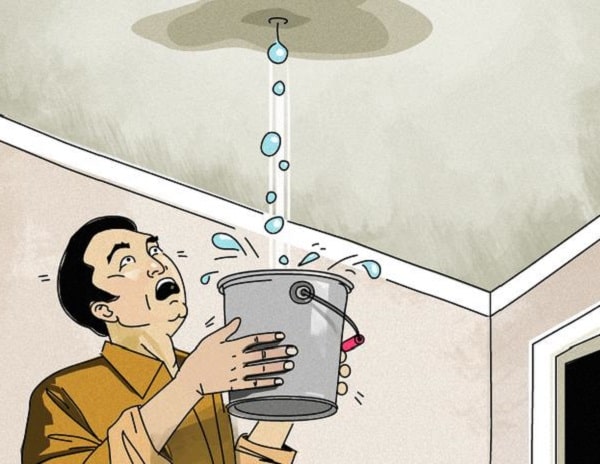
Water-damaged concrete floors are a sign that a project is not up to quality or needs immediate repair. Usually this phenomenon originates from problems in the MEP or fire safety technical piping system. If the cause is detected early, it will be handled very quickly and without spending too much time. Please read the following article to find out the cause and how to handle it most effectively for your project.
6 common causes of concrete floors being water-logged:
Although there are many reasons why concrete floors become water-soaked, the most common and common are:
Concrete quality is not guaranteed:
At this time, holes and voids inside begin to appear. Helping water in contact with the concrete floor will easily seep through these pores.
Wrong construction high degree design:**
During the inspection and supervision process, the finishing level of the concrete floor surface is not standard, leading to the slope on the floor surface not ensuring the design. Therefore, when water on the floor surface will not flow to the correct location. Stagnant water that cannot drain away for a long time will cause the concrete floor to become waterlogged.
Excessive load capacity of concrete floor:
If there are errors in the measurement and calculation process when drafting design drawings, the concrete floor will easily crack due to exceeding the bearing capacity. Cracked concrete floors lead to water seepage through these cracks.
Wrong process water-resistant:
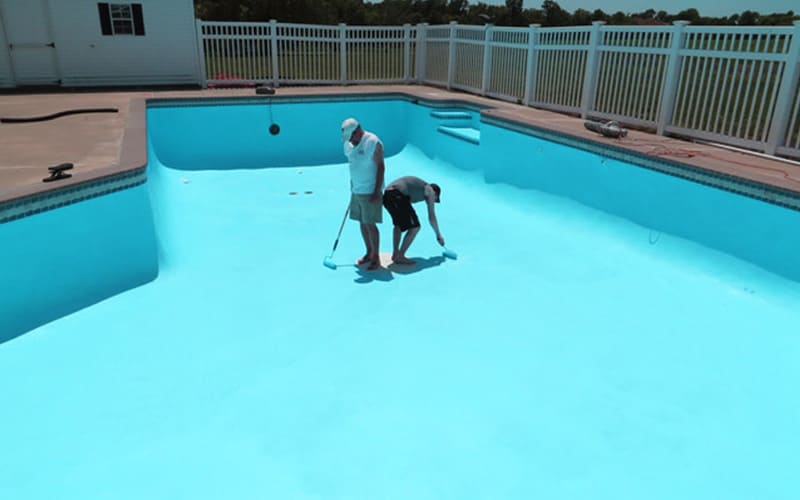
Areas such as bathrooms, toilets, outdoor swimming pools, balconies. Waterproofing concrete floors here is very important because these areas are often exposed to high humidity. If the technique is not met, it will cause the concrete floor to be water-logged.
Problems from MEP system:
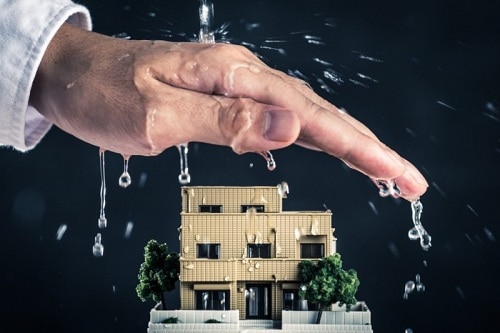
MEP construction often encounters this problem. For example, outdoor balcony water supply and drainage pipes are clogged with debris and construction waste. Flooded water will not drain away and will flood into the house. When water overflows, it will cause a technical error when the floor becomes waterlogged and affects the interior.
In addition, when high-rise buildings have leaks in the ceiling or concrete floor, immediate attention should be paid to the MEP technical piping system. Because the water supply system may be having problems. Because if not handled promptly, water will overflow onto the floor above and seep down below.

Incidents from fire safety pipes:
BECAUSE inside the fire safety pipes of every project there is always pressure and water available. So in many cases, pipes have problems causing water to leak or pour out. The water will then quickly overflow onto the floor and seep down below.
Methods to treat water-damaged concrete floors:
To effectively overcome the problem of water-soaked concrete floors, we can divide them into two types of floors: newly constructed and used.
Treatment of unused water-soaked concrete floors:
Newly constructed concrete floors will be much easier to handle. Because the floor has not yet been leveled and finished. Construction units can directly apply water-resistanting solutions or water-resistanting additives to the floor. Once the water-resistanting has been completed, we will then apply the floor mortar. Then proceed with other tasks such as finishing tiling.
Treatment of used water-damaged concrete floors:
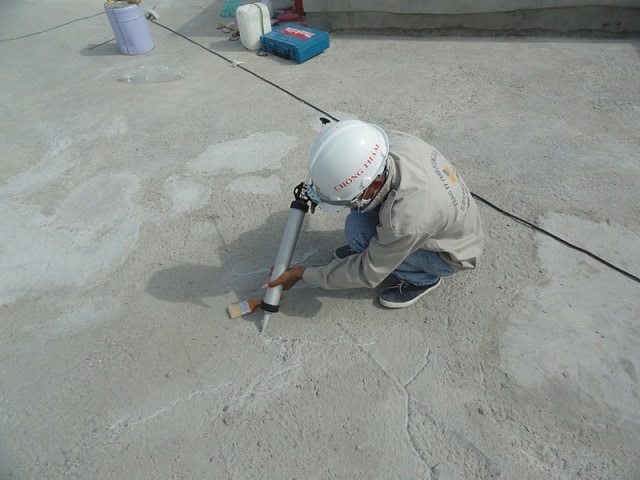
Use specialized glue
The process of water-resistanting with glue for concrete floors is as follows:
- Start chiseling at the location of the leak or where there is a crack.
- Use a steam cleaner to clean dirt around the treatment area.
- Apply water-resistanting sealant along the cracks on the concrete floor surface.
- Apply water-resistanting solution or water-resistanting additives.
- Carry out plastering or screeding to complete the water-resistanting layer.
Use asphalt
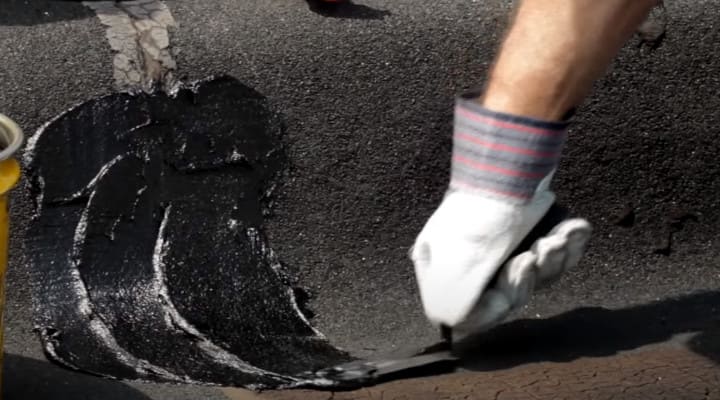
Waterproofing with asphalt is also considered an effective method.
Waterproofing process for concrete floors with asphalt:
- Clean the surface that needs water-resistanting.
- Proceed to melt asphalt.
- Once completed, start using a brush to evenly coat the asphalt layer on the floor. Apply about 3 layers, each layer about 2 hours apart and wait until the plastic surface dries.
- When sweeping asphalt, we should also apply an additional layer of water-resistanting additive.
- Wait for the water-resistanting additive layer to dry, then pour water to see if it is absorbed or not. If nothing, then start plastering.
Waterproofing concrete floors with Bitumen
Pharmaceutical bitumen is divided into two types: Self-adhesive membrane and original water-resistant paint. Bitumen construction for water-resistanting concrete floors brings high efficiency and stability.
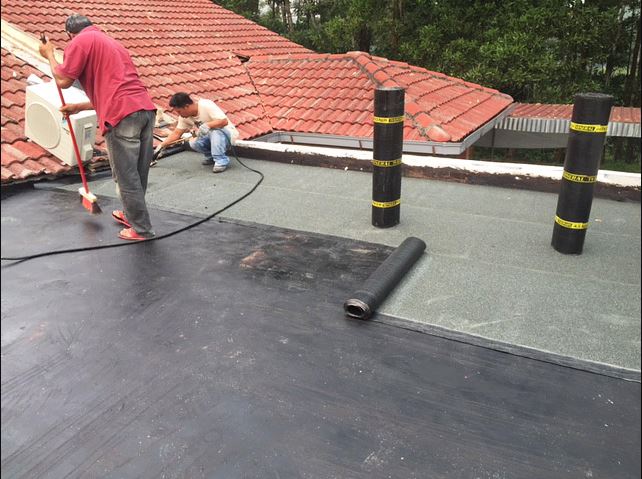
Treat water-damaged concrete floors with self-adhesive Bitumen membrane
- Treat defects, if any, on the concrete floor surface and clean thoroughly
- Cover the concrete floor surface with a bitumen-based primer to increase adhesion
- Spread water-resistanting Bitumen membranes on the area that needs water-resistanting.
- Use a blowtorch to heat the floor surface below the bitumen sheet. Torch the bitumen film evenly to flow out and at the same time stick the bitumen sheet onto the floor surface.
- Treat raised ball holes and use a roller to make the bitumen surface adhere more firmly and evenly.
Note: Locations where the membrane sheet is torn need to be glued over another Bitumen sheet. The overlap margin of Bitumen sheets is required to reach 5cm.
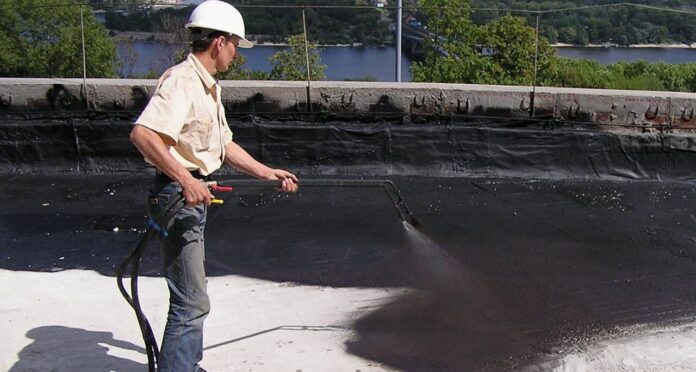
Treat water-damaged concrete floors with Bitumen water-resistant paint
There are many brands of Bitumen-based water-resistanting paint on the market. However, it is necessary to choose genuine brands and distributors to ensure quality.
Treating water-damaged concrete floors with bitumen-based water-resistanting paint is quite simple as follows:
- Mix Bitumen-based water-resistanting paint according to the manufacturer's ratio (usually 50%).
- Apply the 1st layer of water-resistant paint evenly onto the concrete floor surface
- After about 2 hours for the first layer to dry, proceed to apply the second layer of Bitumen-based water-resistanting paint. The norm for applying the second layer of paint is usually from 0.5kg/m2 for water-resistanting.
- After the second layer dries, apply the third layer similarly.
Use Sika water-resistanting
Sika is quite commonly used in treating cracked concrete floors or water-resistanting them. Sika is manufactured with the advantages of high durability and water-resistanting. The method of treating permeable concrete floors with Sika is also simple and does not require too much technical expertise. Refer to the process of water-resistanting concrete floors with Sika as follows:
- Clean the concrete floor area that needs treatment.
- Handle defects on the floor surface such as voids, porous surfaces, raised concrete areas.
- Moisten the concrete floor surface before using Sika water-resistanting.
- Apply Sika water-resistanting layer (Sikatop Seal 107) in 2 to 3 layers. The duration of each water-resistanting layer is 6 hours apart.
- Apply a protective screed layer and complete the concrete floor surface according to design.
Use water-resistant Epoxy paint
Epoxy paint, in addition to being applied to polished concrete floors, is also very effective in water-resistanting the floor. The advantage of Epoxy paint is that it is durable, anti-slip, dust-proof and water-resistant. Refer to the process of water-resistanting concrete floors with Epoxy paint as follows:
- Step 1: Treat defects and clean the permeable concrete floor surface.
- Step 2: Apply Epoxy primer to increase adhesion.
- Step 3: Apply the final layer of Epoxy paint. Be sure to spread the Epoxy paint evenly to ensure it is evenly flat, with a reasonable slope and thickness.
- Step 4: Maintain and when the Epoxy paint layer reaches its strength, you can use it normally.
—————————————-
Hotline: 0931.532.456
Website: https://hass.vn/hass-panel/
No. 99 DT747, Thanh Phuoc, Tan Uyen, Binh Duong, Vietnam (Directions here)
Need a quotation or technical advice?
Send a request and the HASS technical team will respond during business hours.